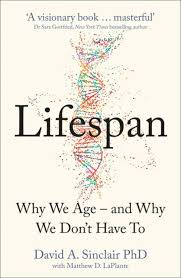
Recent breakthroughs in genetics show that aging actually is a disease. Not only that, it’s a disease that’s potentially curable, and eliminating it would add years to our lifespans. Without the symptoms of aging to deal with, the quality of our newly extended lives would be improved immensely.
Of course, like any disease, aging is best treated not by tackling its symptoms one by one but by targeting its root cause. Cancer provides a useful comparison here. Up until the 1960s, researchers didn’t understand what caused cancer, so treatment focused on symptoms, not root causes. Doctors removed cancerous cells where they found them, often destroying healthy cells in the process.
In the 1970s, molecular biologists discovered the oncogene. This is the specific gene that causes cancer when it mutates. Instead of attacking symptoms at random, subsequent cancer treatments could specifically target the oncogene, leaving healthy cells unscathed and improving patient survival rates.
So why haven’t we done something similar in our approach to aging? Because until now, very little was known about its root cause. However, a spate of recent breakthroughs are bringing scientists ever closer to pinpointing it.
Where do these scientists think the source of aging lies? It’s deep within our genetic makeup, as we’ll see in the next blink.
Our genes are hardwired for longevity.
The freshwater polyp Hydra vulgaris – a small water-dwelling organism – has long fascinated geneticists. Why? It’s evolved to resist biological senescence. This is the slow deterioration of function that occurs when cells that have stopped dividing accumulate in an organism. It’s also, essentially, the cause of aging.
In the wild, Hydra vulgaris are vulnerable to predators and other environmental factors; when kept in lab conditions, however, they seem to be effectively immortal as they show no signs of aging. Other “immortal” creatures, like the bristlecone tree, the Greenland shark and the bowhead whale, have also seemingly evolved to defy or significantly defer biological senescence.
Could humans possibly evolve in a similar way? Our genetic hardwiring seems to indicate we could.
While most living organisms haven’t evolved to resist senescence, they have all survived by evolving the same gene circuit, a kind of closed system in which the action of one gene triggers the reaction of another, and so on.
To understand this gene circuit, we need to go back to the very beginning of biological life and the primordial soup, filled with rapidly dividing and multiplying cells. Scientists speculate that these early cells all had two genes inside of them. Let’s call them gene A and gene B.
Gene A is a caretaker gene that shuts down cell reproduction in response to environmental stressors. After all, there’s no point in reproducing in an inhospitable environment. Gene B is a silencing gene; when environmental conditions improve, it wraps gene A in protein, shutting it down and thereby restarting the process of reproduction. Basically, gene A is the red light for cell reproduction, and gene B is the green.
But in order to survive, some cells evolved a gene circuit in which gene B didn’t just shut off gene A, it also actively repaired any damaged DNA within the cell before reproduction started up again. This meant that damaged DNA wasn’t replicated, which was important because replicating damaged DNA is one way in which cells can lose the ability to replicate altogether. And cells that can’t replicate become senescent.
Humans now exhibit a more evolved version of this survival circuit, but its basic function is the same: to repair DNA and prevent the loss of genetic information that causes cells to stop replicating, become senescent and contribute to the aging process. In this sense, we’re hardwired to avoid senescence. So, why aren’t we immortal? The answer to this question lies in that very same survival circuit.
The Information Theory of Aging proposes that aging is the loss of cellular information.
The author’s Information Theory of Aging posits that aging occurs because of a loss of cellular information. This loss of information is caused by the repair process that should prevent aging. As we’ve seen, DNA can be damaged when it’s repaired incorrectly. That means a cell losing the vital information it needs to replicate perfectly, eventually leading to the cell ceasing to function altogether.
Now, if the vital information that makes us who we are were just contained within our DNA, this wouldn’t be a problem – DNA can replicate perfectly on its own. But our epigenome is equally vital.
What’s that? Well, let’s say that the fertilized human egg, where our parents’ DNA is combined and resequenced into our own personal DNA, is the source of our personal genetic information. Then the epigenome – the collective term for all the processes and structures that regulate our genes and their expression – is the transmitter of that information to its receiver, our bodies.
One of these epigenetic processes is called gene marking, and it’s important as it’s also a contributing cause of information loss. Basically, gene marking occurs when genes place chemical tags on cells that tell them what they should be – telling a kidney cell that it’s a kidney cell and not a brain cell, for example.
Some of the genes involved in this process, like sirtuin genes, also play an important role in DNA repairing, extending our lifespan and promoting vitality. These genes encode a family of proteins called sirtuins which can be deployed to move around inside their home cell, switching other genes within the cell on and off in response to emergencies like illness or inflammation, as they go. Sirtuins are like roaming caretakers, making the repairs and adjustments each cell needs to stay healthy and functional.
Obviously, “longevity genes” like sirtuin genes are tremendously important in the fight against aging. The flip side is that when they don’t function correctly, they can also cause aging. That’s because when sirtuins are mobilized to respond to emergencies, they don’t always find their way back to their rightful place inside their cell. They can turn into unregulated agents, switching off genes that should be switched on, and vice versa. When sirtuins go rogue, they contribute to the loss of cellular information that causes aging.
Thanks to the Information Theory of Aging, researchers are not only grasping the root cause of aging. They’re also coming closer to developing an effective cure. In the meantime, there are many ways you can optimize your longevity genes; changing the way you eat, for example, as we’ll see next.